



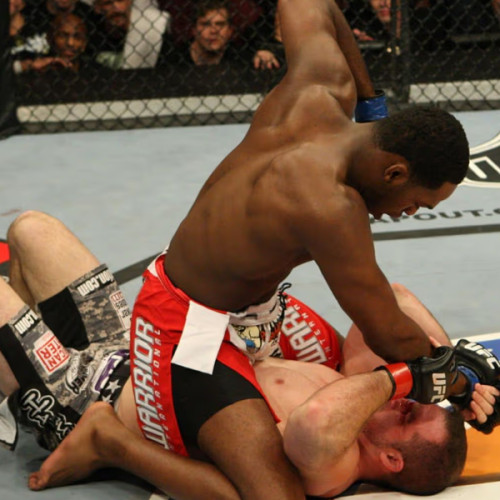
Brutal Even by MMA Standards: The Most Dangerous Legal and Illegal Strikes
Mixed martial arts was once commonly described as “no-holds-barred fighting,” but MMA has never truly existed without rules. Even 30 years ago, when the UFC and other promotions were just getting started, regulations already existed. They were unusual and far less restrictive than today, but they were still rules.
Over time, regulations became stricter. Some dirty and excessively dangerous techniques were banned, but several brutal-looking and potentially harmful strikes remain completely legal.
LEGAL STRIKES THAT ARE MORE DANGEROUS THAN MOST
The following three techniques have never been considered illegal or dirty. However, they are among the most dangerous strikes a fighter can receive.
FLYING KNEE
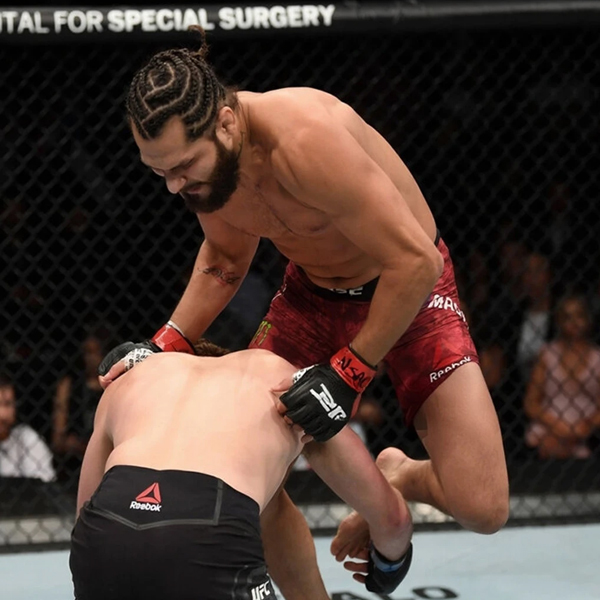
The flying knee is completely legal and extremely dangerous.
There are two main ways to use it. A fighter can launch the strike while moving forward, which makes it effective during pressure, or while moving backward to punish an overly aggressive opponent or an unprepared takedown attempt.
Why is the flying knee so dangerous?
The knee is a relatively small but extremely hard striking surface. During a jumping attack, a large amount of force and momentum is transferred through it. When the opponent is also moving forward or dropping for a takedown, their own momentum increases the impact.
A clean flying knee against an advancing opponent often results in an immediate knockout.
The fastest knockout in UFC history came from a flying knee. Jorge Masvidal perfectly anticipated Ben Askren’s opening takedown attempt and met him with a running knee just seconds into the fight.
Yoel Romero was another outstanding user of the technique. His athleticism helped him score two flying-knee knockouts during his career.
SPINNING ELBOW
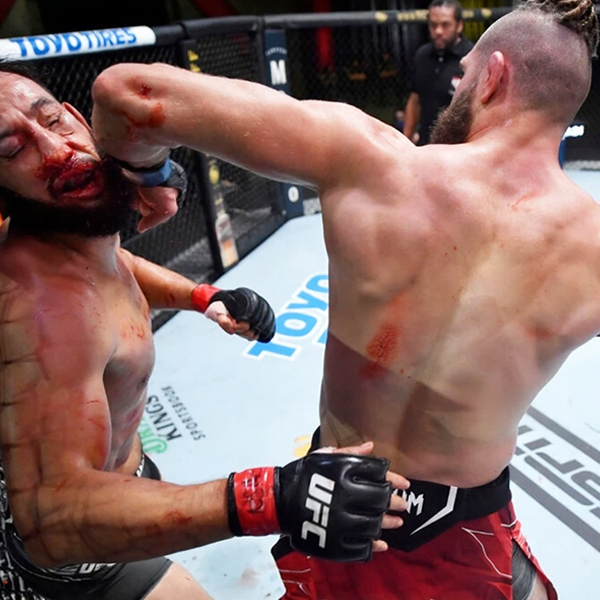
Almost every type of elbow strike is dangerous.
The striking surface of the elbow is comparable in size to the knuckles, but unlike a fist, it is not covered by a glove or layers of hand wrap. Elbows also tend to travel along cutting angles, making them particularly effective at opening cuts.
Traditional elbows have two major limitations: short range and limited rotational force.
A spinning elbow solves both problems. The rotation creates additional power and extends the effective distance of the strike. It combines knockout potential with a high risk of cuts.
Fighters can throw the spinning elbow as a counter, after missing a jab, while trapping an opponent against the cage, or when chasing someone who is moving laterally.
Several fighters became known for spectacular spinning-elbow finishes. Yair Rodriguez recorded one of the latest knockouts in UFC history. Tony Ferguson attacked with elbows from unusual angles, while Shara Bullet produced a rare double-spinning attack.
However, one of the most ruthless users of spinning elbows has been Jon Jones.
FRONT KICK TO THE HEAD
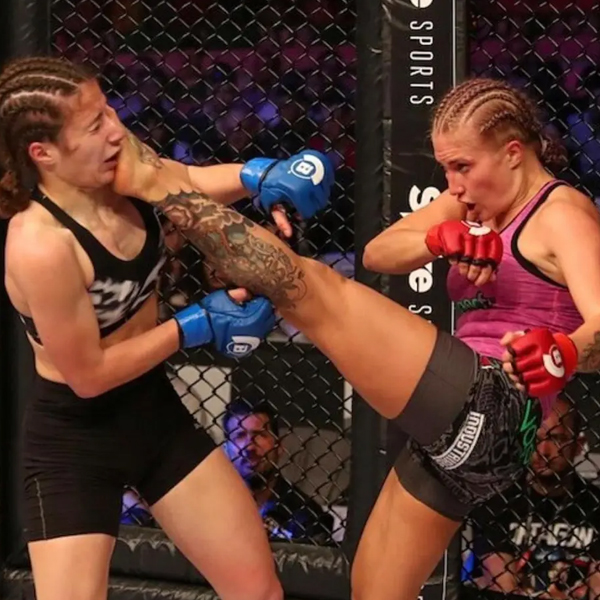
A front kick to the head can be even more dangerous than a conventional round kick.
There is no complete statistical database showing how often these kicks land or produce knockdowns, but visually, their effectiveness is obvious.
The front kick to the head is difficult to predict. When a fighter sees an attack travelling directly up the centre, they usually expect a kick to the body rather than the face. This becomes especially effective when the attacker has already conditioned the opponent to expect front kicks to the torso.
An unexpected strike has a much greater chance of producing a knockout.
Several famous finishes came from front kicks to the head. Anderson Silva knocked out Vitor Belfort, Michael Chandler stopped Tony Ferguson, and Lyoto Machida produced one of the most memorable examples when he finished Randy Couture with a jumping front kick.
DIRTY-LOOKING BUT LEGAL STRIKES
These techniques look brutal enough to be banned, but they remain legal under the rules used by the UFC and most other major promotions.
OBLIQUE KICK TO THE KNEE
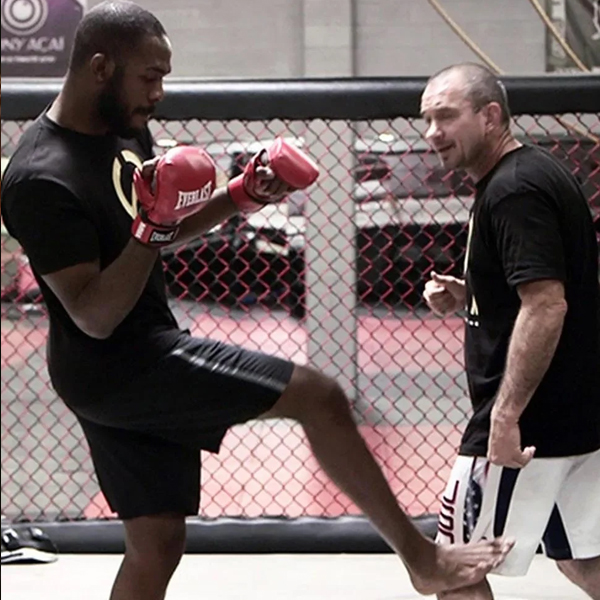
The oblique kick is the only technique on this list aimed at the lower body, but it may be one of the most unpleasant strikes to receive.
Technical strikers use it to control distance, interrupt forward movement and prevent opponents from applying pressure.
There are two main versions.
The first is a less aggressive rear-leg kick. The fighter remains in position and drives the rear leg diagonally into the opponent’s thigh, as close to the knee as possible.
The second version is thrown with the lead leg. The fighter shifts their bodyweight forward and may add a small hop, producing something similar to a side kick. The target remains the thigh near the knee, ideally struck from an angle rather than directly from the front.
Ian Machado Garry frequently uses the oblique kick. The technique has also been linked to the knee injury that kept Shavkat Rakhmonov out of competition for an extended period.
The most famous and technically accomplished user of the strike is Jon Jones.
KNEE TO THE BODY OF A GROUNDED OPPONENT
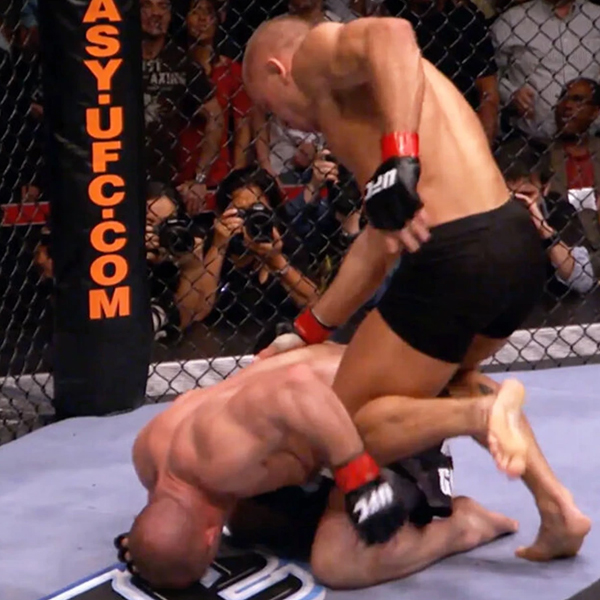
A knee to the body of a grounded fighter is completely legal, although a well-executed version can look severe enough to be illegal.
This technique rarely produces the same controversy as knees to the head, but when elite fighters use it effectively, the damage can be considerable.
There is nothing especially complicated about the mechanics. Unlike knees to the head, knees to the torso of a grounded opponent are permitted in the UFC and other major promotions.
They are commonly used against fighters who have covered up in the turtle position, kneeling face-down with their arms protecting their head.
Dominant grapplers who force opponents into defensive positions often use this strike. Khabib Nurmagomedov, Islam Makhachev and Jon Jones have all applied it effectively.
One of the most memorable finishes from this position came when Georges St-Pierre defeated Matt Serra in their April 2008 rematch.
12-TO-6 ELBOWS
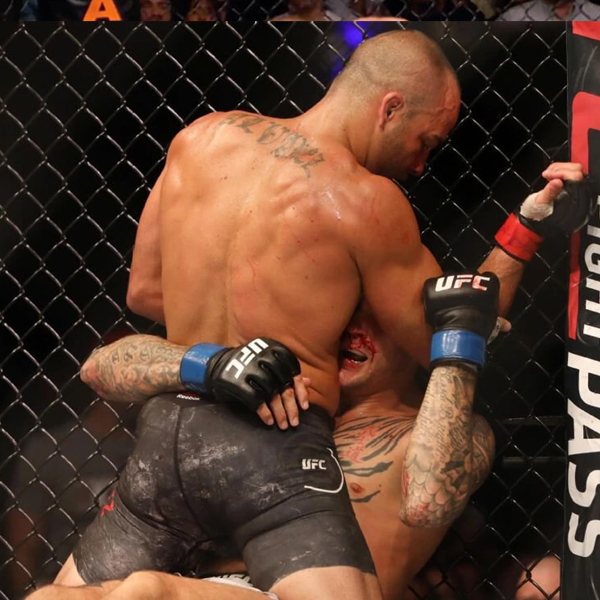
For most of UFC history, downward 12-to-6 elbows were illegal.
The ban has an unusual origin. Referee John McCarthy, who helped develop the Unified Rules of Mixed Martial Arts, explained that members of the Nevada State Athletic Commission were influenced by martial arts demonstrations in which practitioners used downward elbows to break stacks of bricks.
In reality, the circumstances of a real fight are very different from a staged demonstration.
Even so, downward elbows can still be dangerous, particularly when they land near the temple, jaw or ear.
Jon Jones again provides the most famous example. The only official loss on his record came after he used 12-to-6 elbows that were illegal at the time.
The ban was removed in 2024, and the technique is now legal under the updated Unified Rules. Alex Pereira recently used downward elbows while attempting to finish Magomed Ankalaev.
ILLEGAL OR PARTIALLY ILLEGAL STRIKES
The following techniques are banned in all or most major MMA promotions, although some were once common in leading organisations.
KNEE TO THE HEAD OF A GROUNDED OPPONENT
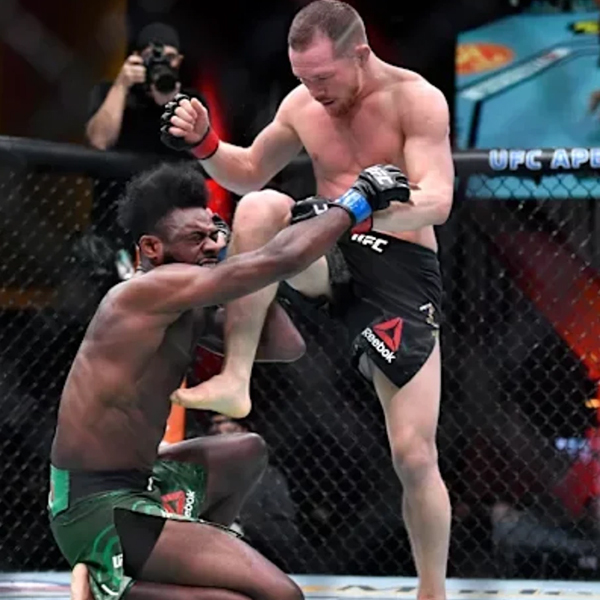
This is the technique that dramatically changed the career of Petr Yan.
Knees to the head of a grounded opponent are illegal in the UFC and other promotions operating under the Unified Rules of MMA. However, they are permitted in the Asian promotion ONE Championship.
It is not always obvious why this technique is banned while several equally dangerous strikes remain legal.
Allowing knees to the head could increase the pace of ground fighting and prevent fighters from using certain grounded positions as a form of protection. However, there is currently little pressure to legalise them in the UFC.
During the PRIDE era, dominant wrestlers frequently used knees to the head from positions such as north-south. Mark Coleman, Fedor Emelianenko and Kevin Randleman were all effective with the technique.
A more recent example came in ONE Championship, when Adriano Moraes knocked out Demetrious Johnson with a knee to the head on the ground.
STOMPS
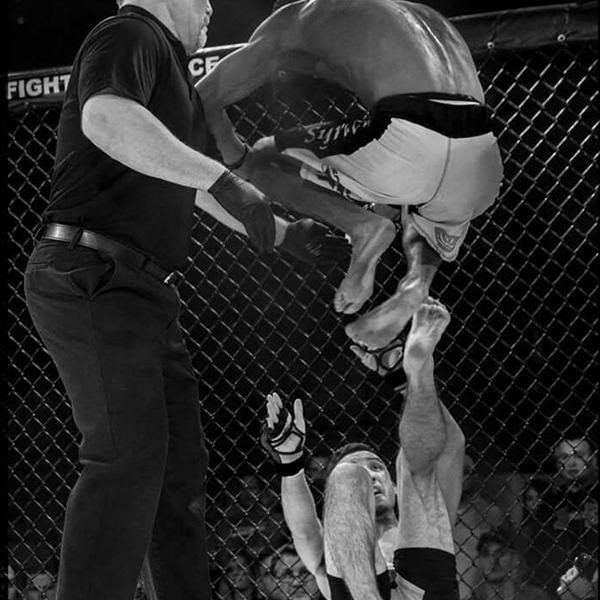
Stomps to a grounded opponent are currently banned in every major promotion except RIZIN.
Unlike grounded knees, the reasons for banning stomps are easier to understand. They can make a sporting contest resemble a street assault, which is likely why they were removed from the Unified Rules.
They were legal in PRIDE.
Stomps are particularly effective against wrestlers who fail on a takedown attempt and remain exposed on the ground. In that position, the standing fighter can attack the legs or deliver stomps to the head.
Mauricio “Shogun” Rua became strongly associated with the technique during his PRIDE career. His record includes two knockouts by stomps: against Hiromitsu Kanehara in 2005 and Cyrille Diabaté in 2006.
After joining the UFC, Rua repeatedly said that he missed being able to use stomps.
Following his 2019 draw with Paul Craig, Rua explained that he had often found himself in top position and wished the technique had been legal.
SOCCER KICKS
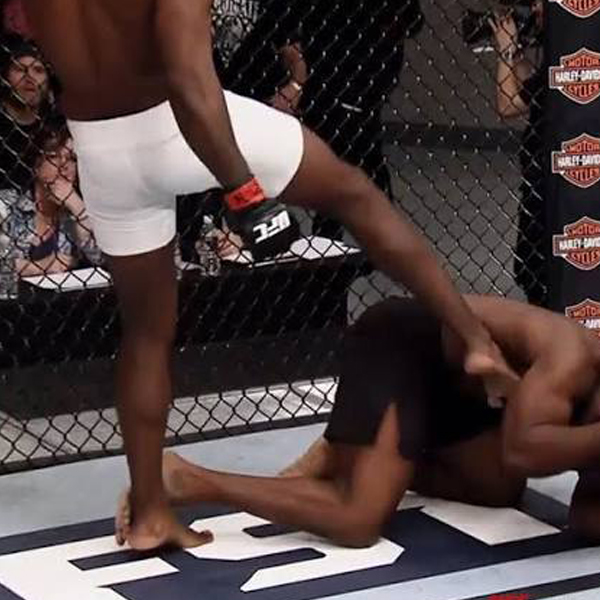
Soccer kicks are closely related to stomps.
They are banned in almost every major promotion but remain legal in RIZIN, which continues some of the traditions established by PRIDE.
The name was popularised by American commentators, who compared the motion to kicking a football lying on the ground.
Soccer kicks can be used in more situations than stomps and may cause even greater damage. When an opponent is positioned on their knees and elbows in the turtle position, a full-force kick to the head is one of the most brutal techniques imaginable.
Such scenes were common in PRIDE during the 2000s.
Mauricio Rua also perfected soccer kicks and recorded two knockouts with them. Kazushi Sakuraba, known as “The Gracie Hunter,” delivered them from a wider variety of angles.
Mirko Cro Cop produced some of the heaviest soccer kicks in MMA history. Considering the power of his left leg, it is difficult to imagine what his opponents experienced after absorbing one.
Leave a comment